Technical Appliance Guide

Guide to Canadian Robot Vacuums

A practical roadmap for handling salt residue, heavy pet shedding, hardwood transitions, and multi-level floor plans in Canadian households.

Core Takeaways for Canadian Homeowners

Automated vacuums operating in Canadian climates require at least 5,000 Pa suction for winter mudroom grit, LiDAR navigation for unlit basements, and elevated clearance wheels to conquer high floor transitions between ceramic tile and thick thermal rugs.

Table of Contents

Seasonal Flooring Challenges

Navigating Climate Demands & Surface Realities

Domestic floor care in Canada presents specific challenges that general product summaries routinely overlook. Between November and April, residential vestibules accumulate an abrasive mixture of calcium chloride road salt, pulverized gravel, and melted slush. Standard brush rolls clog rapidly under these coarse particles, requiring rubber roller designs that push granular residue directly toward high-velocity suction channels without tangling.

Furthermore, modern detached homes and multi-story townhouses frequently combine oiled hardwood, kitchen ceramic tiles, and sub-floor heating mats. An automated cleaner must adapt pressure instantaneously as it rolls from unsealed oak planks onto entryway runner carpets, maintaining enough downdraft to dislodge embedded pet dander while safeguarding delicate wood finishes from abrasive wheel spin.

  • All-rubber tangle-resistant main rollers minimize hair bind from double-coated northern breeds.
  • Dual ultrasonic sensors allow the robot to identify damp entryway runners and disengage active mopping pads.
  • High-torque drive wheels easily scale 20 mm threshold ramps between tiled kitchens and hardwood corridors.
Guide to Canadian Robot Vacuums
Benchmarking Automation

Practical Architecture & Component Evaluation

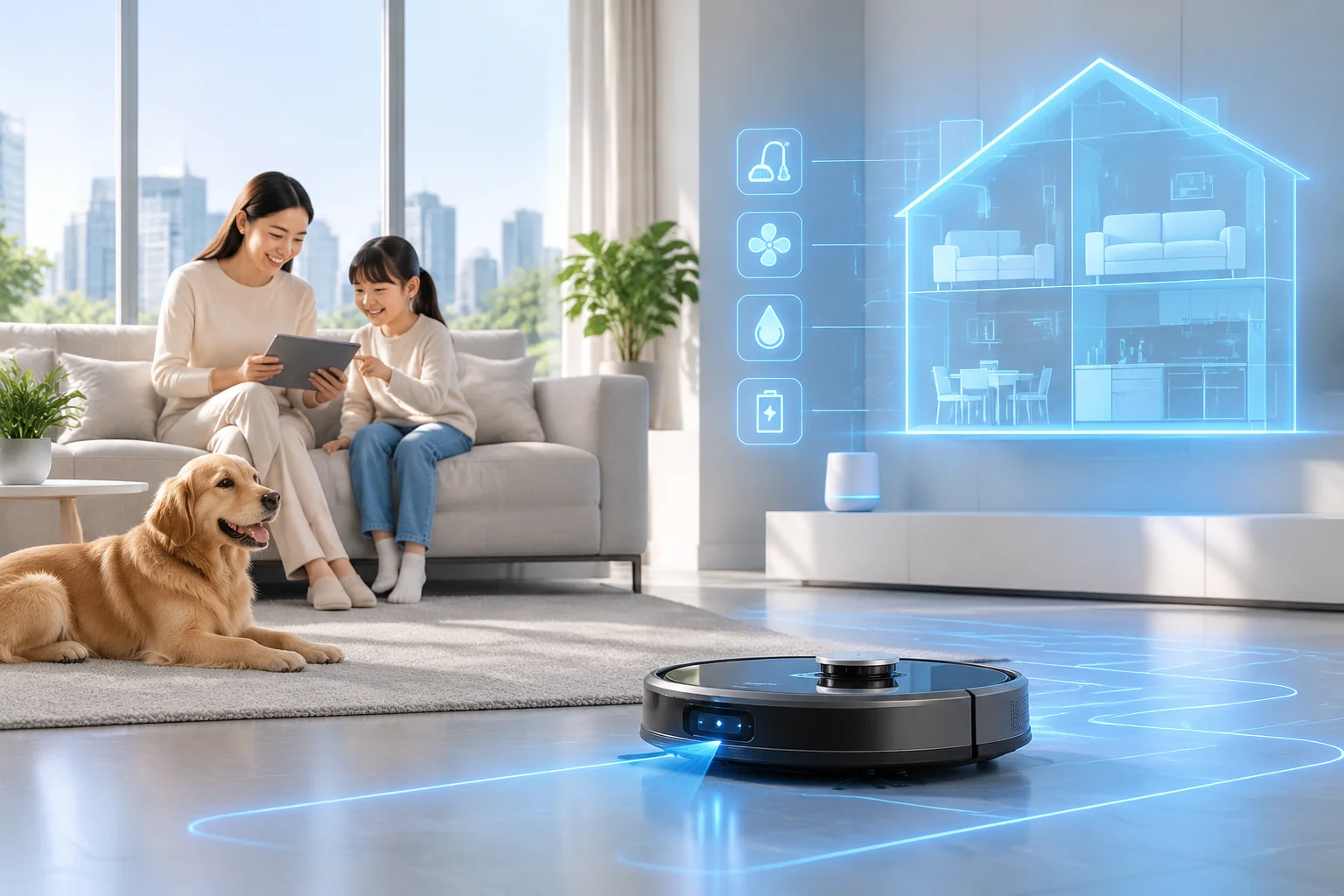
Evaluating robotic cleaners demands a clear look at their mechanical resilience under sustained duty cycles. Optical camera systems often falter during short winter daylight hours or in finished basements lacking overhead ambient light. Precision LiDAR pucks, on the other hand, build millimeter-accurate point clouds regardless of dark corners, avoiding child toys, heavy boots, and heating vent grilles.

Automated evacuation docks have transformed the ownership experience from a daily dustbin chore into a hands-off monthly maintenance task. Self-emptying base stations featuring sealed, hypoallergenic multi-layer bags prevent fine particulates from escaping back into tightly insulated Canadian living rooms during dry winter indoor heating cycles.

"Reliable laser mapping combined with high-lift wet mopping prevents water damage across engineered flooring while ensuring road salt crystals are lifted from front entryways daily."

Recommended Baseline Hardware Specs

Minimum Suction Rating5,000 Pa – 8,000 Pa
Navigation ArchitectureLiDAR + 3D Structured Light
Mop Auto-Lifting Height10 mm to 15 mm
Battery Endurance Capacity5,200 mAh (180 min runtime)
Data Summary

Essential Review Highlights

  1. Salt and Grit Filtration Fine winter salt dust requires sealed HEPA filtration within both the robot chassis and its auto-empty dock to safeguard indoor air purity.
  2. Threshold Clearance Factor Canadian renovations commonly feature raised transitions between stone tile and hardwood; ensure the chassis articulates past 20 mm bevels.
  3. Multi-Level Mapping Townhouses and split-level layouts necessitate software that saves 3 to 4 independent floor maps without requiring multiple docking bases.
  4. Auto-Lift Wet Mopping Mopping pads must automatically raise at least 10 mm when detecting rugs to eliminate damp drag across plush pile carpets.
Common Inquiries

Frequently Asked Questions

Yes, provided the robot uses grooved rubber roller extractors instead of stiff nylon bristle brushes. Rubber agitators encapsulate small stones and salt crystals, directing them into the suction path without grinding them against delicate floor polyurethane finishes.

Modern LiDAR platforms store multiple discrete floor maps in memory. You simply carry the robot to the upper level or basement and press start. It recognizes its surroundings within seconds, navigates room boundaries, and returns to its starting drop spot once cleaning finishes.

Docking stations should always be located in temperature-controlled living areas rather than unheated garages or outer mudroom porches. When operating on indoor floors above 16°C, lithium battery packs retain standard discharge rates and full cleaning cycles without power degradation.

Equipment Inquiries

Explore Advanced Autonomous Floor Care

Review verified suction ratings, dock capabilities, and smart mapping features across top-tier robotic cleaning systems in stock across Canada.